Sunday, July 8, 2007
Lake Toba
This article was originally published in The
This article was originally published in The
On Words
By ANDREW GREENE
Friday, 15 June, 2007, 12:52 PM Local Time
Once the book is released, he will travel about
To read a Faiz collection is to walk
Faiz says he is drawn to poetry because poems are short, meaningful and can often be spontaneously finished at one go. Some he completes within minutes, while his more stubborn pieces can demand a month or two. His Javanese father, Tomi, explains in English, “He doesn’t have a finishing target, so he just writes when he has ideas.”
The poet says he does not worry about writer’s block. When the affliction hits him, Faiz simply goes and plays, confident that the ideas will return. They always do.
He says that he finds ideas everywhere, from all that he sees and all that he hears. He is primarily driven to the keyboard by social problems that he witnesses or reads or hears about. When an idea comes, he records it in his cell phone for later retrieval.
Faiz writes with a clear vision. He knows what needs to be said and will not be satisfied until his message is lucid and strong. He recalls that he has had to fight his editors in order to maintain the integrity and precision of his work. If even a single word is altered, he feels the work is no longer his and does not accept it. His Acehnese mother, Helvi, a university lecturer, says Faiz remembers every word he writes and is tenacious when it comes to protecting each and everyone of them.
On the surface, Faiz is a rather ordinary soon-to-be 12-year-old child. Though smiling and friendly, he is noticeably less-than-comfortable as we talk in his family’s modest living room. He frequently pauses and looks towards the ceiling in search of words. His fingers twist and knot together between his rocking knees. He explains, in Indonesian, that he writes better than he speaks.
When not writing, he is just a boy. He enjoys playing basketball, riding his bike around his Depok neighborhood, reading automobile magazines and books such as Harry Potter and playing computer games.
He spends a lot of time at the computer. Never having liked writing by hand, he took to the keyboard at the age of five. Now he writes poems and updates his blog just about daily. Tomi, a television-news producer, says in English that Faiz is a “completely modern boy.”
Readers of his work come from all walks of life, politicians, fellow-writers, academics and the public at large. President Susilo Bambang Yudhoyono considers Faiz’s work to be “very touching.” Political and religious leader Amien Rais calls Faiz “a deeply thoughtful writer,” while former president Megawati Soekarnoputri hopes his work will “inspire and give spirit to future generations.”
Poet Agus R Sarjono says that Faiz’s “worry about social situations is his fresh style.” Professor Riris T. Sarumpaet finds Faiz’s “concern to be pure, simple, transparent, and deeply sensitive.”
One of his poems so clearly demonstrates the need for governmental transparency that it is used by Masyarakat Transparasi Indonesia (the Society for Transparency of Indonesia), in its anti-corruption campaign.
Faiz’s first book, Untuk Bunda dan Dunia (For Mother and Earth), has been reprinted ten times since it came out in 2004. All of his books together have sold around 80,000 copies.
Later in the interview, Faiz relaxes and shows me around the family’s upstairs office. The wall next to the computer is nearly completely covered with writing and poetry awards the he has won and framed clippings from newspapers and magazines that have featured the boy poet.
Faiz says that he wishes there were more young authors in
Faiz possesses that sensitivity. He suffers from it. Helvi says that her son is so painfully aware that he used to cry whenever he witnessed or learned of sorrow. Now, he crafts that raw openness into his art and uses it to affect change. He donates half of each royalty check to his two foster brothers in
As he shows me his blog, I think to myself that he is fortunate the room still has three bare walls. I get the feeling he is going to need them.
Abdurahman Faiz’s blog is at http://masfaiz.multiply.com.
My Lord
Give me your time
To grow in the road of love
A seedling
In all along the road of my parents
In all along the road of my
In all along the road to you
Amen
July 2003
(translated by Rafi Hayati and Andrew Greene)
(Sidebar, two of two)
No one dances any longer
Between the filthy tents
Over here
Only suffering
Caught in our eye
And our ear
Not even one song
We ever sing anymore
Only teardrops sing
Between hunger, thirst
Changing seasons
Have you noticed this, my brother?
October, 2003
(translated by Rafi Hayati and Andrew Greene)
 The Recorder of Secret Worlds
By ANDREW GREENE
Saturday, December 16, 2006, 5:57 PM Local Time
The 66-year-old
He says when he was a young man he studied law and decided to become a journalist for the chance to see the world. “A journalist doesn’t need to pay to travel,” he explains. “The company pays.” Following his interests, he has mainly written about exploration, the environment, and culture.
Being a journalist in
“During the Suharto era, one had to be an acrobat to write,” the father of two teenaged girls remembers. “The army, the special forces, thought that no one else was clever, but we were clever too.”
Despite the freedom reporters currently enjoy in
“The Marsinah case, where she was tortured and killed [in 1993 after trying to assist colleagues who had been arrested following a strike at the Catur Putra Surya watch factory in Sidoarjo where they worked] is one example,” he explains.
“The journalist in Yoga [Syafruddin, a correspondent for the
“In
Hasman says technology has had a positive effect on Indonesian journalism. “It saves time and money and we can send reports from anywhere. But Indonesians use technology to show off too. We are still in an agricultural era but waste time and energy on things like airplanes as [Suharto’s crony and
Low salaries are another problem many Indonesian journalists face according to Hasman. “The publishing business here is worse, more evil than in capitalistic countries,” he says. “The top get more money, they are sharks, while those who face the sticks and rocks, the reporters earn less and less. That is why reporters ask for money from sources although it is illegal to do so.”
“Except for those from Tempo Magazine and Kompas [daily newspaper], many journalists do this,” continues Hasman. “According to [the Indonesian Journalists Association] PWI regulations, they face two years in prison for this, though I do not think anyone has ever been charged. It is like the 1974 polygamy ban, never enforced.”
Hasman acknowledges there have been some positive players in Indonesian journalism over the decades. “Goenawan Mohamad, [founder and editor of Tempo Magazine] has had a great influence on
“Without him and others, most of
Hasman is pleased with the country’s present direction but says he is aware there remain many hurdles to overcome. “The more you know about
“People start being corrupt at school,” says Hasman, “when they begin looking at their schoolmates’ tests. Parents and teachers do not teach them. This situation will not improve until the rule of law is implemented.”
According to Hasman, religion and the war on terror present his nation with some further difficulties. “Islam is a very sensitive part of life in
“Ujung ujungnya duit, UUD. It all ends up with money,” he continues. “The fanatics are being used. Where is their money coming from? The
Journalism has enabled Hasman to travel as he has wished. He has been part of expeditions to Irian Jaya, Kalimantan, Wakatobi, and
The people of Papua are among Hasman’s favorite to visit. “They’re very fragile,” he says. “They change their minds quickly because they’re not yet stable. The jump from the stone age to the modern age is too high for them.”
One of his greatest adventures was in 1993 when he was part of a group of journalists who bicycled across
In addition to the bicycling and expeditions, Hasman says he has climbed peaks around the world including Mount Kilimanjaro,
As an anthropology writer, he says he has studied the Badui, Kanekes and Kasepuhan of West Java, along with the Asmat, Dani, Yali of Irian Jaya, the Tengger people of the
Much of his anthropological writing and work has been about the Badui. He says this is because of their proximity to
Hasman says that he has visited the Badui more than 500 times over the last 31 years. This makes him one of the world’s foremost experts on the tribe that has lived largely unchanged in the highlands of
Budi Hartono, an Anthropology and Tourism lecturer from the
The Badui live in 40 villages, on 5,000 hectares in the hills around
The Inner Badui are only permitted to wear home-spun and woven white cloth. They are forbidden from growing cash crops, eating four-legged animals, taking modern medicine, using electricity or any form of transportation. Due to their strict mores they are often called “The Amish of Java.”
The Outer Badui, says Hasman, follow the same traditions and norms as the inner but are less strict in their adherence.
Hasman says it is difficult to get information on the Badui and anthropologists have published papers containing numerous mistakes.
“The more you want to squeeze them, the more they try to mislead you. That’s the way their brains are,” Hasman says. “They [the observers] do not spend long enough, nor come often enough. Five to ten years is nothing. That is just enough to study the cover. You must get their confidence, but, even then, they’ll still try to hide things.”
Hasman has no plans of slowing down. He is half finished writing a book about the Badui for the Indonesian Heritage Society. Ro King, the heritage’s chairman, says, “Don has been a friend of the Indonesian Heritage Society for many years. He has given three Evening Lectures on the Badui people… Don is truly our link to these wonderful people [the Badui].”
Next year he is planning a journey to the world’s seven deadliest volcanoes. For this trip he will travel to two sites in
Powered by his enthusiasm, Hasman hopes to continue bringing the stories of hidden worlds to his readers for years to come.
This article was published in The Jakarta Post’s Weekender Magazine, March 2007.
 Life at the Fire Post
 By ANDREW GREENE
Friday, November 17, 2006, 12:45 PM Local Time
MAMPANG,
Ladio, Team A’s leader, remembers a fire in Manggarai, South Jakarta in 2002 in which, he says, one man’s house had already been destroyed by the time the fire truck arrived on the scene. “He was very angry and wanted everyone else’s house to burn too. He blocked our truck’s path.”
“After we were eventually able to connect our hose, he cut it. Fifteen to 20 houses ended up being destroyed and all the residents were enraged. By the time we returned to the fire post we had been attacked with fists, knives and sticks and all of truck’s windows had been smashed.”
Even when not facing the wrath of the people, fighting fires can be tough and dangerous work. Last year a Block M market burned for three days, killing
The city’s lack of firefighting infrastructure also presents the team with a variety of challenges. Though some of
When hydrants are not accessible, other sources of water must be found. Firefighter Ahmad Gozali says, “In many areas we’re forced to pump water from the canals or from anywhere we can find it. As a last resort, we carry foam that is normally used for fighting oil-based fires.”
Getting to the fires can be difficult too. The standard for all of
Ladio says Team A averages less than 15 minutes arrival time adding, “I wish that other drivers would respect the siren more and make way for our truck.”
Ordinarily, Team A does not fight many fires. They have not been on a call since late October and average only one or two responses a month.
Calls do not often come in. “I would like people to know that they need to call us on 113 when there is a fire,” says Gozali, 22, a second-generation firefighter originally from the
Three teams, A, B, and C, work out of the Mampang Fire Post. Each team consists of a leader, a driver, and three fighters. The teams work 24-hour shifts starting at nine each morning before receiving 48 hours off.
Ladio, the only married member of his squad, has been a firefighter for nearly two decades and A’s leader for five years. Their driver is 23-year-old Denny Wahyudi, a Sukabumi native and a rookie with a year’s experience. The firefighters are Rahmat, 26, Ahmad Gozali, 22, and Rizal, 20, who have all been in the profession for less than three years.
Ladio explained that
Unfortunately for the posts, only the firefighting centers and sector houses are equipped with traditional fireman poles.
When not out on calls, Team A keeps busy doing physical fitness, training, cleaning and performing maintenance on the fire post and their equipment, watching TV, and teaching the community about fire prevention.
“People need to use standard electrical cables and not to overload household sockets,” says the Yogyakarta-born, 42-year-old father of two, Ladio. “Also, many fires are caused by the careless use of cooking fires and kerosene lamps. We try to spread awareness about how dangerous these items are.”
The Jakarta Fire Agency was quoted by The Jakarta Post as having recorded nearly 500 fires last year, “mostly caused by electrical short circuits or stove explosions.”
About twice monthly, kindergarten and elementary school children visit the fire post. “The children love visiting,” says Ladio, his youthful face lighting up with the memory. “They love to climb aboard the truck and it is good for us and society for them to learn about fire safety and how to contact us.”
There are numerous obstacles to becoming a firefighter in
The actual training begins with three-months of theoretical and practical firefighting education. “Learning to survive and work in a smoke-filled room is the most difficult,” says Gozali. “It’s dark, hot, and even with the breathing apparatus, very hard to breathe. Mentally, it’s very stressful.”
Following this training the candidates are assigned to a fire post where they are given half a year’s worth of on-the-job experience. Once this is finished, they officially become firefighters.
With the amount of time off that firefighters get, it is not uncommon for them to have second jobs. Rizal says that many firefighters, though reportedly no one from Team A, work as fire security personnel for hotels and other private companies.
Today, Mampang Fire Post waits for its call. The five-year-old Isuzu Ziegler fire truck, smaller than a
Ignoring the televised game, Ladio reflects for a moment, leans back, grins, and answers that he is satisfied with his career. “I joined because I wanted to help people. And, I know that we are doing just that.”
This article was first published in The Jakarta Post 20 November, 2006.
This article was first published in The Jakarta Post on Oct 6, 2006
Placing His Trust in God
By ANDY GREENE
Friday, September 29, 2006, 7:33 PM Local Time
MAMPANG,
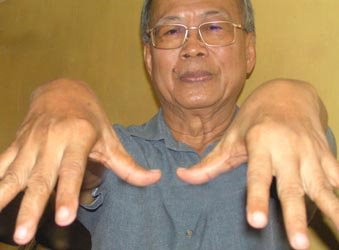 “I am simply a tool. I leave it to God.”
 All Quiet on the Waterfront.
By ANDY GREENE, KAPress Writer
Sunday, September 17, 2006, 9:10 PM Local Time
SUNDA KELAPA,
During a public discussion at the University of Regensburg about the relationship between Christianity and Islam, the pope quoted the 15th-century Byzantine emperor Manuel II Palaeologus by saying, “Show me just what Muhammad brought that was new, and there you will find things only evil and inhuman, such as his command to spread by the sword the faith he preached.”
These words, quoted at the university where the pope had once been a professor and vice rector, have enflamed many Muslims worldwide.
AP reported seven churches were firebombed this weekend in the Palestinian West Bank. Such attacks are particularly troubling since relations between Muslims and Christians in this region are generally considered to be peaceful.
 ack as she was going to lunch. The murder took place hours following a top Somali cleric’s public condemnation of the pope’s remarks.
Chief Indonesian Muslim Cleric Sheikh Marouf Amin was also, according to ANTARA news agency, disturbed by the pope’s quotation and said, “Such insulting and hurtful statements should not be made by a man of such high stature as the Pope.”
However, Catholic priest Benny Susetyo did not believe that those who were angry completely understood the pope’s message. He told The Jakarta Post on Saturday that the media was responsible for the uproar by failing to fully explain the context in which the pope had made the remarks. “It would be better for us to read the complete text first,” he said.
Indonesian President Susilo Bambang Yudhoyono urged the 240 million citizens of his nation to remain clam. Quoted from
At least on this Sunday afternoon, in Sunda Kelapa, the president’s wished-for harmony was thriving. With the salt air wet and heavy from the aroma of clove cigarettes and the rough banter of seafaring humor, the men of the harbor were only concerned about their unloading of the shipments of tropical iron wood that was piled high aboard the double and triple mast wooden clippers roped up to the quay. For these men, toiling beneath the tropical sun, the pope and the world’s problems remained a world away.
By ANDREW GREENE, KAPress Writer
Wednesday, September 13, 2006, 4:39 PM Local Time
Asked whether they agree with the president’s statement, 100 percent of the respondents answered negatively. According to some of the responses to this limited-in-scope poll the president is actually in a struggle for creditability.
The Hezbollah/Israeli conflict was sited by one middle-aged lady in today’s noon-time poll as a reason to not support the president’s opinion. She said, “Civilization is alright. His words are just to get more support for what he did, like attacking
“
A Japanese housewife who said she has lived in the tropical nation for nearly three years seemed shocked by the question answering, “
In the address from the Oval Office, Bush made the comment towards the end of a demanding day in which he had honored the memory of the attacks by visiting New York City, Washington DC, and Pennsylvania. Rocking the world, these attacks proved to be the genesis to the lengthy and controversial war against terror. “This struggle has been called a clash of civilizations,” the American leader said. “In truth, it is a struggle for civilization.”
The president’s address continued, “We are fighting to maintain the way of life enjoyed by free nations. And we're fighting for the possibility that good and decent people across the
In the congested streets of
The results show that there may have been a backslide to the recent climb in support for
Today’s poll was carried out by KAPress with one Japanese and nine Indonesian adults being questioned on